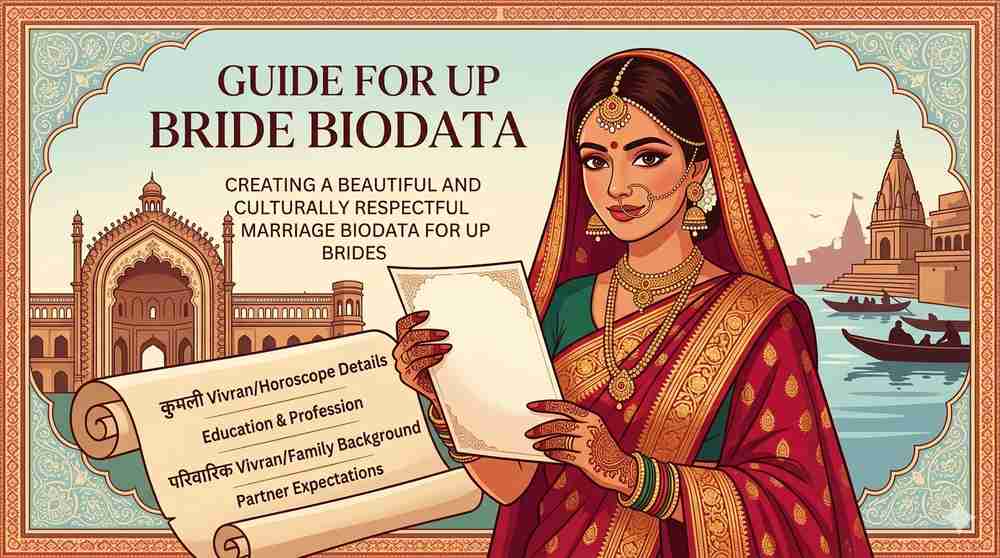
In Uttar Pradesh, marriage is often described as a union of two "Gharanas" (families). A UP marriage biodata needs to balance deep-rooted cultural heritage with the modern aspirations of today’s women. Whether you are from Lucknow, Varanasi, Meerut, or Kanpur, your biodata should reflect your personality while honoring the traditions of the heartland.
What Makes a UP Bride’s Biodata Unique?
Unlike a standard CV, a biodata for a bride from Uttar Pradesh is a storytelling document. It focuses heavily on lineage (Vansha), education, and religious compatibility.
- Regional Roots: Families often look for "Nij-Nivas" (native place) to understand regional compatibility.
- Social Standing: Mentioning the family's reputation and professional background is a standard practice.
- The Language of Respect: While English is common for professional details, using Hindi terms for family relations adds a touch of traditional warmth.
Essential Sections of a UP Matrimonial Biodata
1. Personal Information (Swayam ka Vivran)
Start with the basics, but keep it elegant.
- Full Name: Include your surname clearly.
- Date & Time of Birth: Vital for Kundli matching.
- Height & Complexion: Be honest and graceful.
- Current Location: Mention where you are currently living versus your native city.
2. Birth and Astrological Details (Kundli Vivran)
For many families in UP, the Kundli (Horoscope) is the first filter.
- Gotra: Essential for Hindu weddings to avoid same-gotra matches.
- Manglik Status: Clearly state if you are Manglik, Anshik Manglik, or Non-Manglik.
- Place of Birth: Necessary for accurate chart calculations.
- Rashi & Nakshatra: Providing these helps the groom's side do a quick preliminary check.
3. Educational & Professional Background
UP places a very high value on academic excellence.
- Degrees: Be specific (e.g., "M.A. in Hindi Literature from BHU" or "B.Tech from AKTU").
- Current Role: Mention your designation and company. If you are preparing for Civil Services (UPSC/UPPSC), it is often considered a prestigious detail to include.
- Income: Optional, but helps in setting realistic lifestyle expectations.
4. Family Background (Parivarik Vivran)
This is often the most scrutinized section in a UP biodata.
- Father’s Details: Mention his name and profession (e.g., "Retd. Sub-Inspector," "Businessman," or "Farmer").
- Mother’s Details: Name and whether she is a "Grihini" (Homemaker) or working.
- Siblings: List brothers and sisters with their education and marital status.
- Paternal & Maternal Roots: Mentioning the "Nanighal" (mother’s side) location is a traditional UP custom.
Understanding UP Traditions: Beyond the Paper
When drafting your biodata, keep these local nuances in mind:
- The Concept of 'Khandaan': Families in UP look for a "Sushila" (well-mannered) and "Shikshit" (educated) bride from a family with similar values.
- Caste and Sub-caste: While moving toward a more progressive society, many families still prefer mentioning sub-castes (e.g., Kanyakubja Brahmin, Sunar, Rajput, etc.) to ensure ritual compatibility.
Partner Expectations (Jeevansathi ki Akanksha)
Be clear about what you are looking for to save time for both families.
- Example: "Seeking a well-settled professional, preferably based in Delhi NCR or UP. We value a partner who is respectful of elders, non-smoker, and supports my career aspirations."
Quick Tips for an Impressive Biodata
- The Photograph: Wear a graceful suit or saree. A photo taken during a festival or at a historical spot (like the Ghats or an Imambara) can add a beautiful local touch.
- The Tone: Use words like "Sanskari," "Family-oriented," or "Ambitious" to describe your personality.
- Format: Keep it to 1–2 pages. Use a clean, aesthetic border—perhaps something inspired by Chikankari patterns for a Lucknowi touch.
Ready to Build Your Profile?
Creating a biodata doesn't have to be stressful. Focus on being yourself. If you want a professional touch, you can use tools like marriagebiodatacreator.com to find templates specifically designed for traditional Indian weddings.
Frequently Asked Questions (FAQs) for UP Bride Biodata
Here are the most common questions families and brides have when preparing a marriage biodata in Uttar Pradesh:
1. Is it mandatory to mention my "Gotra" in the biodata?
For most Hindu families in UP, especially Brahmins, Rajputs, and Kayasthas, the Gotra is essential. It is used to ensure that the bride and groom do not belong to the same lineage (Sagotra), which is traditionally avoided in marriage.
2. How should I mention my Civil Services (UPSC/UPPSC) preparation?
In UP, being a "Civil Services Aspirant" is highly respected. You can list it under the professional section as: "Currently preparing for Civil Services (UPSC/UPPSC) after completing [Your Degree]." This clarifies that you are career-oriented and intellectually driven.
3. Should I include my maternal family (Nanighal) details?
Yes. In UP culture, the reputation of the Nanighal is often discussed during the initial family meeting. Mentioning the city or the prominent surname/background of your mother’s side can be very helpful for traditional families.
4. What is the best way to state that I am Manglik?
Be direct and honest. You can write: "Manglik: Yes" or "Anshik (Partial) Manglik." If you are not Manglik, writing "Manglik: No" or "Non-Manglik" helps clear the air immediately for horoscope matching.
5. Should the biodata be in Hindi or English?
A bilingual approach is usually best. Use English for educational and professional details, but use Hindi (or Devanagari script) for traditional sections like family names or "Native Place" (Nij-Nivas). This shows respect for your roots while appearing modern.
6. Do I need to mention my annual income?
While not mandatory for brides, many modern UP families prefer it if the bride intends to continue working after marriage. It helps in understanding the combined financial stability of the future couple.
7. How many photos should I attach?
Ideally, attach two photos: one close-up (portrait) showing your face clearly with a pleasant smile, and one full-length photo in traditional attire like a Saree or Anarkali suit.
8. What does "Native Place" mean if I’ve lived in a city all my life?
"Native Place" refers to your ancestral village or town where your grandparents or extended family reside. In UP, this is crucial as it helps families identify their regional "Biradari" or community connections.
9. Should I mention "Dietary Preferences" (Veg/Non-Veg)?
Yes. Many families in regions like Varanasi or Mathura are strictly vegetarian. Clearly stating whether you are "Pure Veg" or "Non-Veg/Occasional Non-Veg" prevents future lifestyle conflicts.
10. Can I mention that I want to live in a "Nuclear Family"?
If this is a firm preference, you can word it gently in the 'Partner Expectations' section. For example: "Looking for someone who is family-oriented but also values an independent lifestyle." This is more diplomatic than stating "Nuclear family only."
Pro Tip: If you're feeling overwhelmed, websites like marriagebiodatacreator.com offer specific layouts for North Indian weddings that include dedicated fields for Gotra, Manglik status, and family roots.