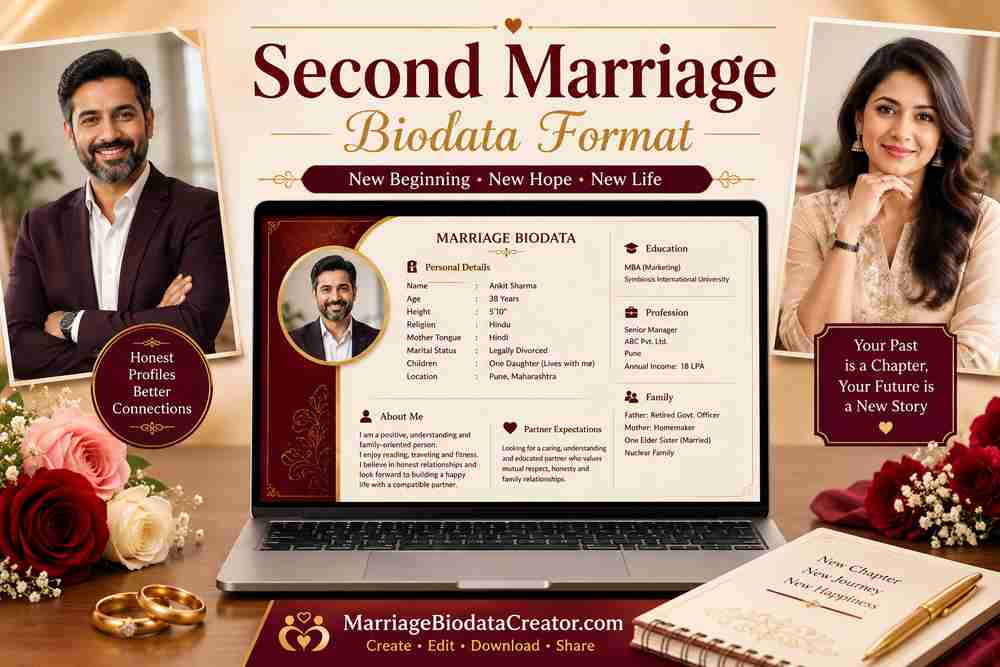
Starting a new chapter in life after a divorce or the loss of a spouse takes courage, hope, and a positive outlook. If you're planning to remarry, creating a Second Marriage Biodata Format is one of the first and most important steps in introducing yourself to potential life partners .
Whether you're a divorcee, widow, or widower, a well-designed biodata helps establish trust, communicate your values, and create a strong first impression.
In this detailed guide, you'll learn everything about creating a second marriage biodata—from choosing the right format to writing an engaging "About Me" section, showcasing your family background, sharing partner expectations, and avoiding common mistakes.
By the end of this article, you'll have a clear understanding of how to prepare a modern, respectful, and attractive biodata that reflects who you are today and the future you hope to build.
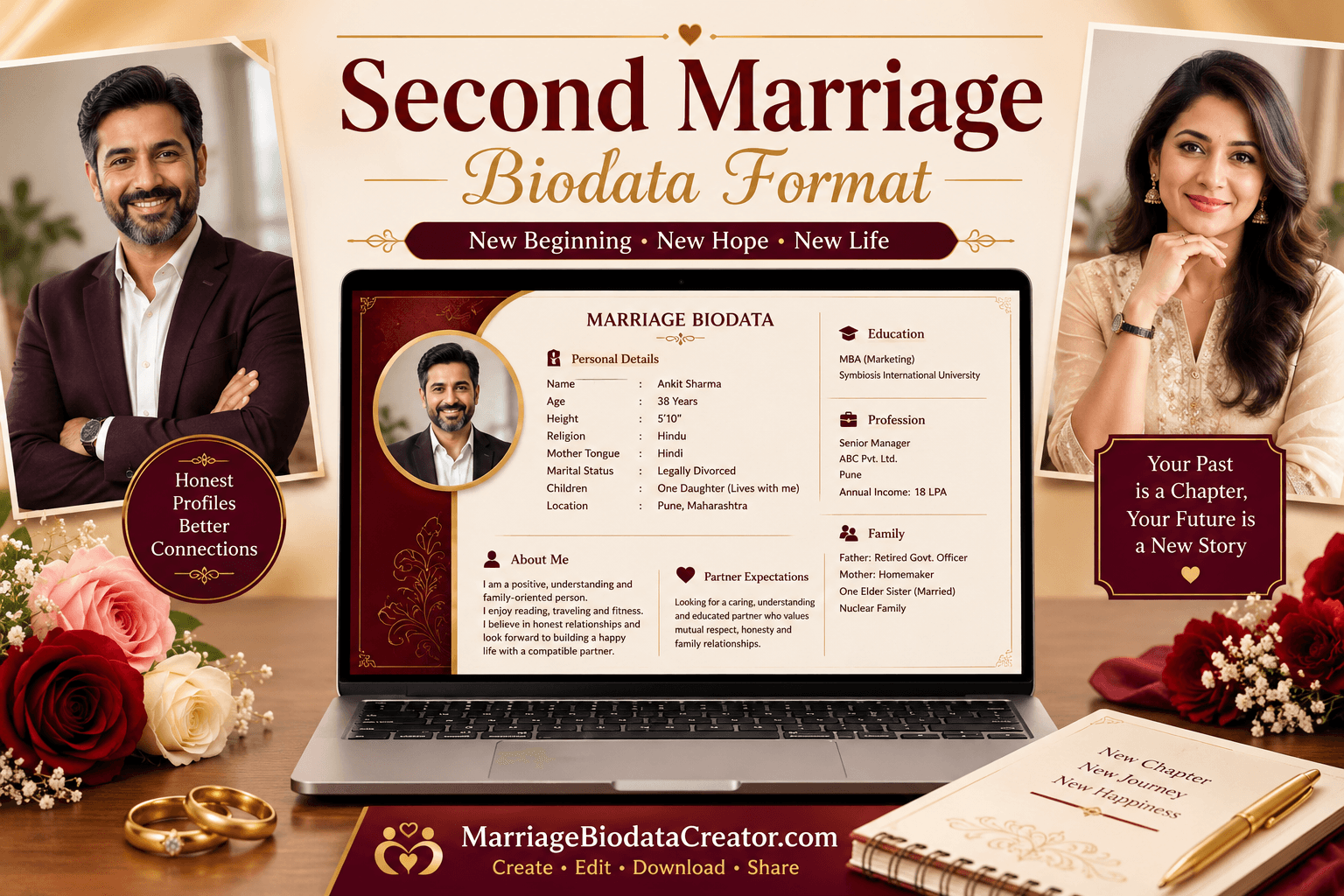
What is a Second Marriage Biodata Format?
A Second Marriage Biodata Format is a structured matrimonial profile created by individuals who have previously been married and are now seeking a life partner for remarriage.
It serves as an introduction to prospective partners and their families by presenting relevant personal and professional information in a clear, respectful, and organized manner.
Unlike a résumé or CV, a marriage biodata is designed specifically for matrimonial purposes. It highlights not only educational and career achievements but also family background, lifestyle, interests, and relationship expectations.
For second marriages, the biodata also includes appropriate information such as:
- Marital status (Divorced, Widow, Widower)
- Children (if applicable)
- Family details
- Personal values
- Future goals
- Partner preferences
The purpose is not to dwell on the past but to introduce yourself honestly while emphasizing the future you wish to build.
Why is a Professional Second Marriage Biodata Important?
A thoughtfully prepared biodata demonstrates maturity, transparency, and sincerity. Since second marriages often involve additional considerations, such as previous marital status or children, a well-organized profile helps answer common questions upfront while maintaining dignity and privacy.
Here are some key benefits:
Creates a Positive First Impression
A clean and attractive biodata reflects seriousness and respect for the matchmaking process.
Builds Trust
Being transparent about your current situation encourages open communication and strengthens confidence among prospective families.
Saves Time
A complete biodata allows interested families to understand your background without repeatedly asking for basic details.
Highlights Your Strengths
Instead of focusing on your previous marriage, your biodata showcases your personality, education, profession, family values, and aspirations.
Simplifies Matchmaking
Whether you're using matrimonial websites or family references, a professionally designed biodata helps streamline the search for a compatible partner.

Who Should Use a Second Marriage Biodata Format?
A second marriage biodata is suitable for anyone seeking remarriage after the end of a previous marriage. This includes individuals from various backgrounds and age groups who wish to present themselves respectfully and professionally.
Common categories include:
Divorcee Groom
Men who are legally divorced and looking for a compatible life partner.
Divorcee Bride
Women who have completed legal divorce proceedings and wish to start a new chapter in life.
Widow
Women whose spouse has passed away and who are ready to consider remarriage.
Widower
Men who have lost their spouse and are looking for companionship and a meaningful relationship.
Individuals with Children
Parents who have children from a previous marriage should mention this information honestly and respectfully, along with the current living arrangements if relevant.
Essential Information to Include in a Second Marriage Biodata
A complete biodata should be informative without being overwhelming. The following sections help create a balanced and professional profile.
1. Personal Details
Include the following:
- Full Name
- Date of Birth
- Age
- Height
- Weight (Optional)
- Religion
- Community/Caste (Optional)
- Mother Tongue
- Nationality
- Current City
- Contact Information
These details help prospective families understand your basic profile quickly.
2. Educational Qualifications
Mention your highest educational achievements, including:
- Degree
- College or University
- Professional Certifications (if applicable)
Example
- MBA in Marketing
- Delhi University
- Certified Project Manager
3. Career Information
Professional details provide insight into your career and lifestyle.
Include:
- Occupation
- Company Name
- Designation
- Work Location
- Annual Income (Optional)
Example
Software Engineer
ABC Technologies Pvt. Ltd.
Bengaluru
4. Family Background
Your family information helps prospective matches understand your values and upbringing.
Include:
- Father's Occupation
- Mother's Occupation
- Brothers
- Sisters
- Family Type (Joint/Nuclear)
- Family Values
Example
"We belong to a well-educated nuclear family that values honesty, respect, and mutual support. Our family combines traditional values with a modern outlook."
5. Marital Status
This section should be simple and factual.
Examples include:
- Legally Divorced
- Widow
- Widower
Avoid lengthy explanations or personal stories in the biodata itself.
6. Children (If Applicable)
If you have children, mention it honestly.
Examples:
- No Children
- One Son (Lives with Me)
- One Daughter (Shared Custody)
Being transparent builds trust and avoids misunderstandings later.
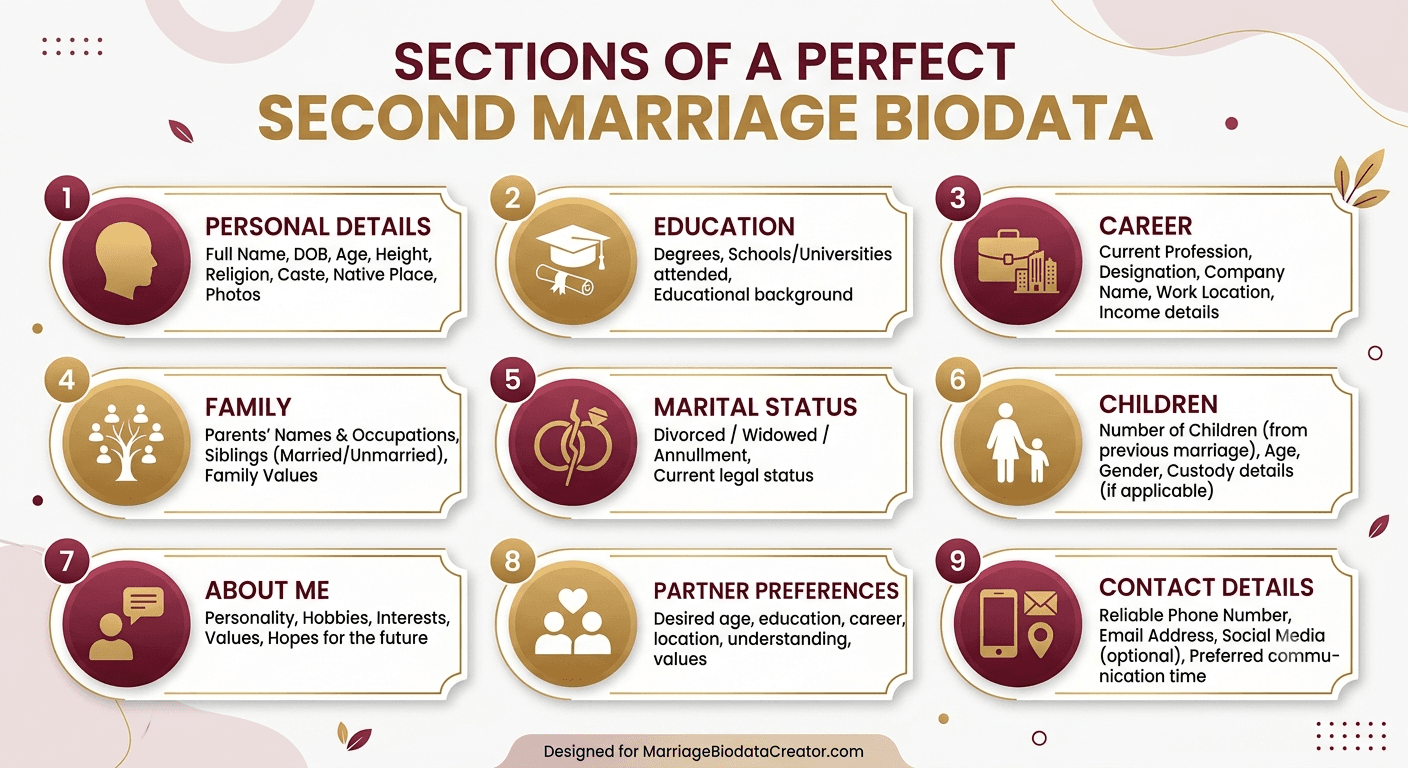
Step-by-Step Second Marriage Biodata Format
Below is a simple format that works well for both men and women.
Section | Details to Include |
|---|---|
Personal Details | Name, Age, DOB, Height, Religion, Mother Tongue |
Education | Highest Qualification |
Profession | Occupation, Company, Location |
Family | Parents, Siblings, Family Values |
Marital Status | Divorced, Widow, Widower |
Children | Mention if applicable |
About Me | Personality, Hobbies, Lifestyle |
Partner Preference | Qualities you're looking for |
Contact Details | Phone or Email |
This structure is widely accepted and easy to understand for prospective families.
Why Honesty Matters in a Second Marriage Biodata
One of the biggest concerns in second marriages is trust. While it's natural to want to present yourself in the best possible light, it's equally important to be transparent about significant aspects of your life.
You don't need to share every detail of your previous marriage in the biodata. Instead, focus on providing accurate information about your current circumstances. Mention your marital status clearly, disclose whether you have children, and avoid hiding details that may later affect the relationship.
A sincere and positive profile is far more appealing than one that is incomplete or misleading. Honesty lays the foundation for meaningful conversations and long-term compatibility.
FAQS on Second Marriage Biodata Format
1. What is a Second Marriage Biodata Format?
A Second Marriage Biodata Format is a matrimonial profile designed for individuals who are seeking remarriage after a divorce or the loss of a spouse. It includes personal details, education, profession, family background, marital status, children (if any), an "About Me" section, and partner preferences.
2. What should be included in a Second Marriage Biodata?
A professional Second Marriage Biodata should include your name, age, date of birth, height, religion, education, occupation, family details, marital status, information about children (if applicable), hobbies, lifestyle, partner expectations, and a recent photograph.
3. Where can I download a Second Marriage Biodata Format PDF?
You can create and download a Second Marriage Biodata Format PDF using an online marriage biodata maker. Most platforms allow you to customize the layout, add your details, upload a photo, and export the biodata in PDF format for easy sharing.
4. Is there a Second Marriage Biodata Format available in Word?
Yes. A Second Marriage Biodata Format in Word is available in editable DOCX format, allowing you to personalize your profile, update information anytime, and print or save it as a PDF.
5. How is a Divorcee Marriage Biodata different from a regular marriage biodata?
A Divorcee Marriage Biodata follows the same basic structure as a regular marriage biodata but includes additional details such as marital status, children (if any), and focuses more on present values and future expectations rather than past relationships.
6. What is the best Widow Marriage Biodata Format?
The best Widow Marriage Biodata Format is one that presents personal information, education, profession, family background, hobbies, and future aspirations honestly and respectfully. It should maintain a positive tone while clearly mentioning the current marital status.
7. Should I mention the reason for divorce in a Second Marriage Biodata?
No. In most cases, it is sufficient to mention "Legally Divorced" in your Second Marriage Biodata Format. Detailed discussions about your previous marriage can be shared later if both families decide to move forward.
8. Can I create a Second Marriage Biodata online for free?
Yes. Many online platforms allow you to create a Second Marriage Biodata Online using professionally designed templates. You can fill in your details, customize the design, and download the biodata in PDF or Word format.
9. What is the ideal length of a Second Marriage Profile Format?
A well-designed Second Marriage Profile Format should ideally be one or two pages long. It should include all important information in a clear and organized layout without adding unnecessary personal details.
10. Which is the best online tool to create a Second Marriage Biodata Format?
If you're looking for professionally designed templates, easy editing, and instant PDF downloads, MarriageBiodataCreator.com is an excellent choice. It offers modern Second Marriage Biodata Format templates suitable for divorcees, widows, and widowers, making it simple to create a polished matrimonial profile in just a few minutes.