When it comes to arranged marriages or modern matchmaking, two terms are often used interchangeably—Marriage Biodata and Matrimonial Profile. While both serve the same ultimate purpose (helping individuals find a suitable life partner), they differ significantly in format, usage, and presentation.
In this blog, we’ll break down the key differences between a marriage biodata and a matrimonial profile so you can choose the right one for your needs.
What is a Marriage Biodata?
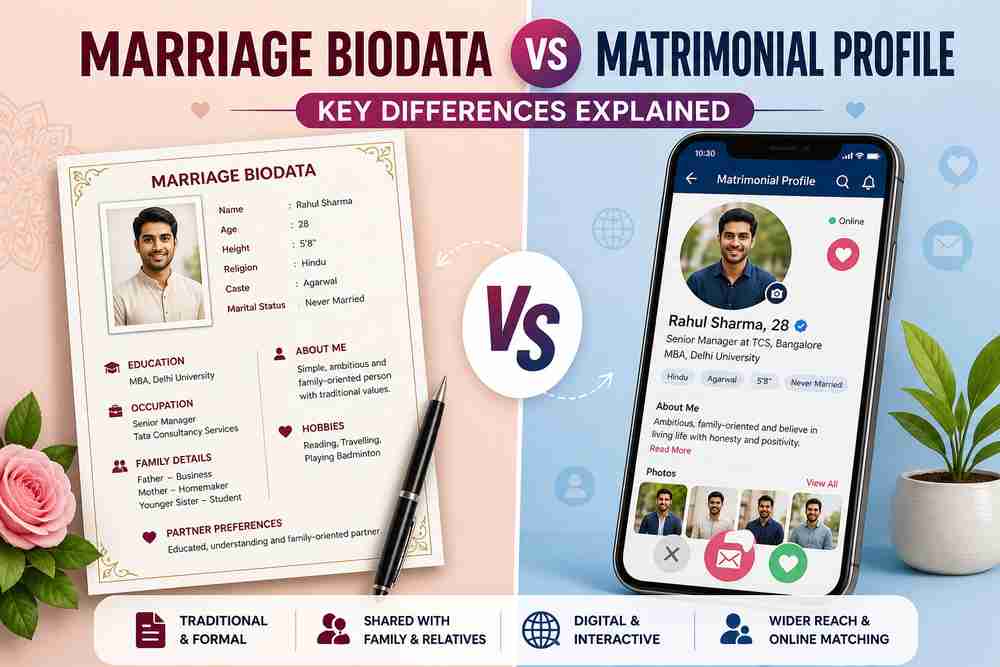
A Marriage Biodata is a formal document that provides structured information about a person for marriage purposes. It is widely used in traditional matchmaking, especially in India.
Key Features of Marriage Biodata:
- Formal and document-style format (Word/PDF)
- Includes personal, family, and religious details
- Often shared via WhatsApp, email, or print
- Usually created for family involvement in matchmaking
Common Sections in a Marriage Biodata:
- Personal Information (Name, Age, Height, Religion)
- Education & Career Details
- Family Background
- Hobbies & Interests
- Partner Preferences
- Photograph
What is a Matrimonial Profile?
A Matrimonial Profile is a digital profile created on online matchmaking platforms. It is more dynamic, interactive, and designed for wider reach.
Key Features of Matrimonial Profile:
- Hosted on matrimonial websites/apps
- Can be updated anytime
- Includes photos, videos, and preferences
- Algorithm-based matching suggestions
- Direct communication features (chat, interest requests)
Common Sections in a Matrimonial Profile:
- About Me (short bio)
- Lifestyle & Habits
- Career & Education
- Family Details
- Partner Expectations
- Uploaded Photos
Marriage Biodata vs Matrimonial Profile: Key Differences
1. Format and Presentation
- Marriage Biodata: Static document (PDF/Word), clean and formal
- Matrimonial Profile: Digital and interactive, often more visually appealing
2. Usage
- Marriage Biodata: Shared within families, relatives, or matchmakers
- Matrimonial Profile: Used on online platforms to reach a broader audience
3. Customization
- Marriage Biodata: Limited customization once created
- Matrimonial Profile: Easily editable anytime
4. Reach
- Marriage Biodata: Limited to personal network
- Matrimonial Profile: Global reach through websites/apps
5. Privacy
- Marriage Biodata: Shared manually with selected people
- Matrimonial Profile: Privacy settings available, but visible to platform users
6. Interaction
- Marriage Biodata: No direct interaction—communication happens outside
- Matrimonial Profile: Built-in messaging and interest features
Which One Should You Choose?
Choose Marriage Biodata If:
- You prefer a traditional matchmaking approach
- Your family is actively involved in the process
- You want a professional, printable format
Choose Matrimonial Profile If:
- You want wider exposure and faster matches
- You are comfortable with online platforms
- You prefer flexibility and frequent updates
Can You Use Both?
Yes—and in fact, using both is often the smartest approach.
You can:
- Create a well-designed marriage biodata
- Upload the same details to a matrimonial platform
- Share your biodata link or file when needed
This way, you combine tradition with technology for better results.
Tips to Make an Effective Marriage Biodata and Profile
For Marriage Biodata:
- Keep it clean and well-structured
- Use a professional template
- Add a high-quality photograph
- Avoid unnecessary details
For Matrimonial Profile:
- Write a genuine and engaging bio
- Upload multiple clear photos
- Be honest about expectations
- Update regularly
Common Mistakes to Avoid in Marriage Biodata and Matrimonial Profiles
Creating a strong first impression is crucial, but many people unknowingly make mistakes that reduce their chances of finding the right match.
In Marriage Biodata:
- Adding too much unnecessary or irrelevant information
- Using outdated or low-quality photographs
- Poor formatting or cluttered design
- Including incorrect or inconsistent details
In Matrimonial Profiles:
- Writing a vague or overly generic “About Me” section
- Exaggerating achievements or hiding important facts
- Not updating the profile regularly
- Ignoring privacy settings
Avoiding these mistakes can significantly improve your chances of attracting the right partner and making meaningful connections.
Conclusion on Marriage Biodata vs Matrimonial Profile
While both Marriage Biodata and Matrimonial Profile serve the same goal, they cater to different approaches—traditional vs modern. Understanding their differences helps you present yourself better and increases your chances of finding the right match.
If you want the best results, don’t limit yourself—use both strategically and make a strong first impression.
FAQs on Marriage Biodata vs Matrimonial Profile
1. What is the difference between marriage biodata and matrimonial profile?
A marriage biodata is a formal document shared offline or via PDF, while a matrimonial profile is an online profile created on matchmaking websites with interactive features.
2. Which is better: marriage biodata or matrimonial profile?
Both have their advantages. Marriage biodata is ideal for traditional matchmaking, whereas matrimonial profiles offer wider reach and faster connections online.
3. Is marriage biodata still important in 2026?
Yes, marriage biodata is still widely used in India, especially in arranged marriages where families prefer structured and formal information.
4. Can I use the same details for biodata and matrimonial profile?
Yes, you can use the same information such as personal details, education, and preferences, but the presentation should be adjusted for each format.
5. What should be included in a marriage biodata?
A marriage biodata should include personal details, family background, education, profession, hobbies, partner preferences, and a recent photograph.
6. What makes a matrimonial profile attractive?
A good matrimonial profile includes a clear bio, high-quality photos, honest details, and well-defined partner preferences.
7. How long should a marriage biodata be?
An ideal marriage biodata should be 1–2 pages long, concise, and easy to read.
8. Are matrimonial profiles safe to use?
Most matrimonial platforms offer privacy settings, but users should avoid sharing sensitive personal information publicly.
9. How can I create a professional marriage biodata online?
You can use online tools and templates to create a clean and attractive biodata quickly, ensuring it looks professional and well-organized.
10. Should I create both a biodata and a matrimonial profile?
Yes, using both increases your chances of finding a suitable match by combining traditional and modern matchmaking methods.