Finding the right shadi biodata format is one of the most important steps in the matrimonial process. Whether you are creating a biodata for an arranged marriage or for online matrimonial platforms, your biodata acts as your first impression. Families and potential matches often judge compatibility based on how clearly and professionally your details are presented.
In this blog, we will explain the difference between traditional and modern shadi biodata formats, their advantages, what details they include, and how to choose the best format for your marriage profile.
What is a Shadi Biodata Format?
A shadi biodata format is a structured document that contains personal, family, educational, and professional details of a person seeking marriage. It helps families and potential partners understand the individual’s background and compatibility.
A marriage biodata generally includes:
- Personal information
- Family details
- Education
- Profession
- Religion and caste
- Lifestyle and hobbies
- Partner preferences
- Photograph
The format and presentation of these details can vary depending on whether you choose a traditional or modern style.
Traditional Shadi Biodata Format
What is a Traditional Biodata Format?
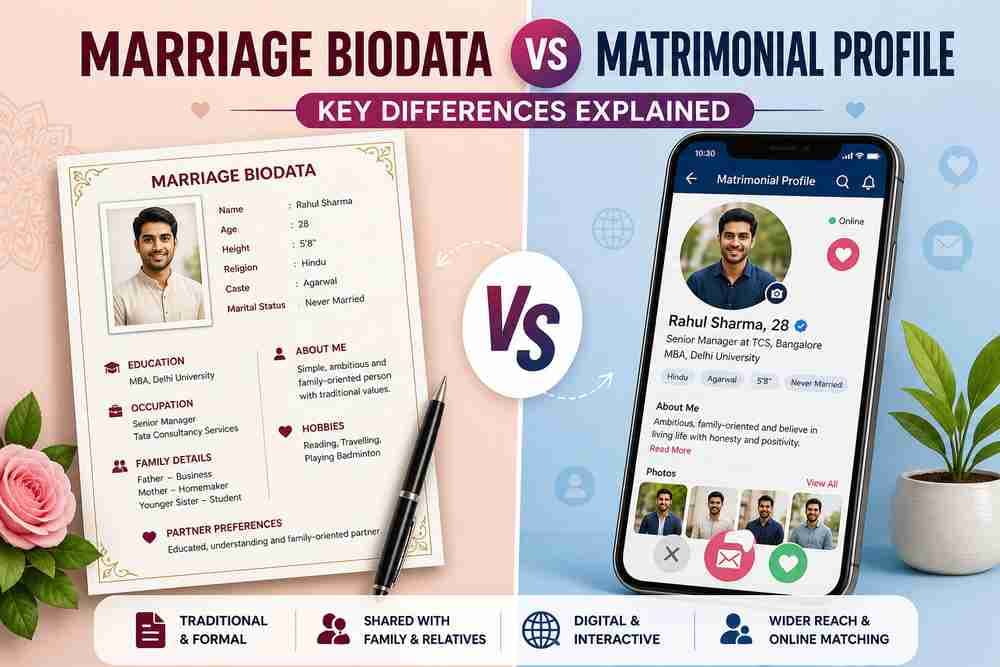
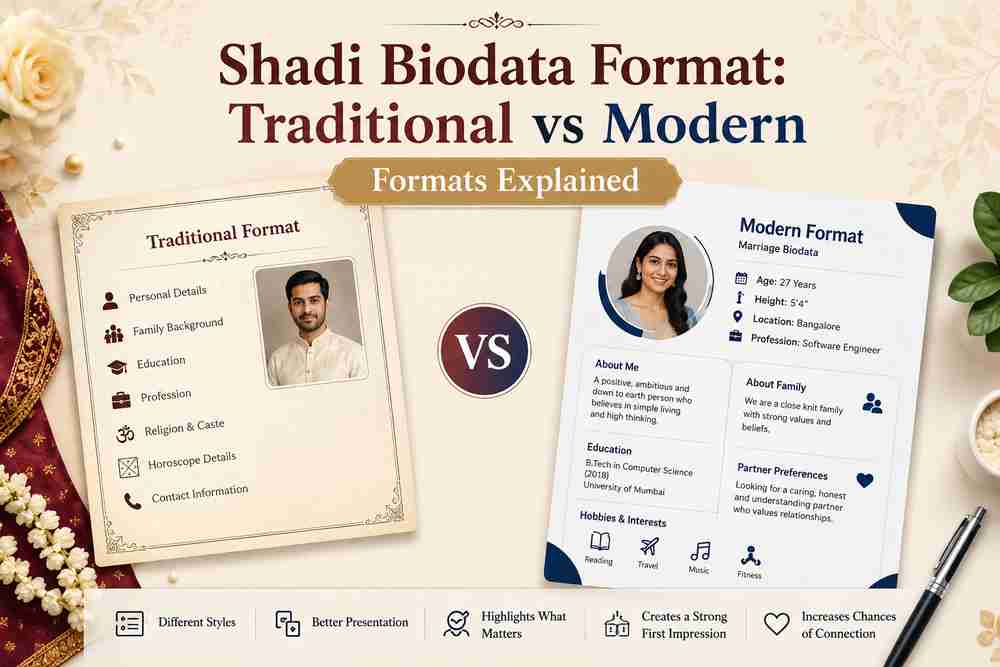
A traditional shadi biodata format follows a simple and formal structure commonly used in arranged marriages. It emphasizes family values, religion, culture, and community background rather than design and aesthetics.
Traditional formats are widely preferred in Indian families where elders are actively involved in the matchmaking process.
Common Features of Traditional Biodata
1. Simple Layout
Traditional biodata formats usually use plain text with minimal design elements.
2. Focus on Family Background
Family reputation, parents’ occupation, and cultural values are highlighted prominently.
3. Religious Information
Details such as:
- Religion
- Caste
- Gotra
- Horoscope
- Manglik status
are often included.
4. Formal Language
The tone remains respectful and formal throughout the biodata.
5. Passport Size Photograph
Usually, a single formal photograph is attached.
Typical Sections in Traditional Biodata
Personal Details
- Name
- Date of birth
- Height
- Weight
- Complexion
- Religion
- Caste
Educational Details
- Highest qualification
- College/university
- Academic achievements
Professional Details
- Occupation
- Company name
- Salary
Family Details
- Father’s occupation
- Mother’s occupation
- Siblings
- Family values
Contact Information
- Phone number
- Address
- Family contact details
Advantages of Traditional Biodata Formats
Easy to Read
Traditional formats are simple and straightforward.
Preferred by Elders
Many families still trust traditional styles for arranged marriages.
Cultural Compatibility
These formats highlight religious and family values clearly.
Professional Appearance
A clean and formal biodata often creates a positive impression.
Limitations of Traditional Biodata Formats
While traditional formats are still popular, they may sometimes look outdated.
Some common limitations include:
- Lack of creativity
- Minimal personalization
- Plain appearance
- Less engaging for younger generations
Modern Shadi Biodata Format
What is a Modern Biodata Format?
A modern shadi biodata format focuses on attractive design, personalization, and better visual presentation. These formats are ideal for matrimonial websites, social sharing, and digitally sending profiles.
Modern biodata styles are especially popular among younger individuals who want their profiles to look stylish and professional.
Common Features of Modern Biodata Formats
1. Stylish Design
Modern biodata templates use:
- Attractive fonts
- Colors
- Icons
- Professional layouts
2. Better Visual Appeal
The overall presentation looks clean and engaging.
3. Personalized Sections
Modern formats often include:
- Hobbies
- Interests
- Personality traits
- Life goals
4. Multiple Photos
Users may include professional or candid photographs.
5. Digital-Friendly
These formats are optimized for:
- Mobile viewing
- PDF sharing
- WhatsApp sharing
- Matrimonial websites
Typical Sections in Modern Biodata
Basic Information
- Name
- Age
- Height
- Location
Education and Career
- Qualification
- Profession
- Work achievements
- Career aspirations
Lifestyle Details
- Hobbies
- Interests
- Food preferences
- Fitness habits
About Me Section
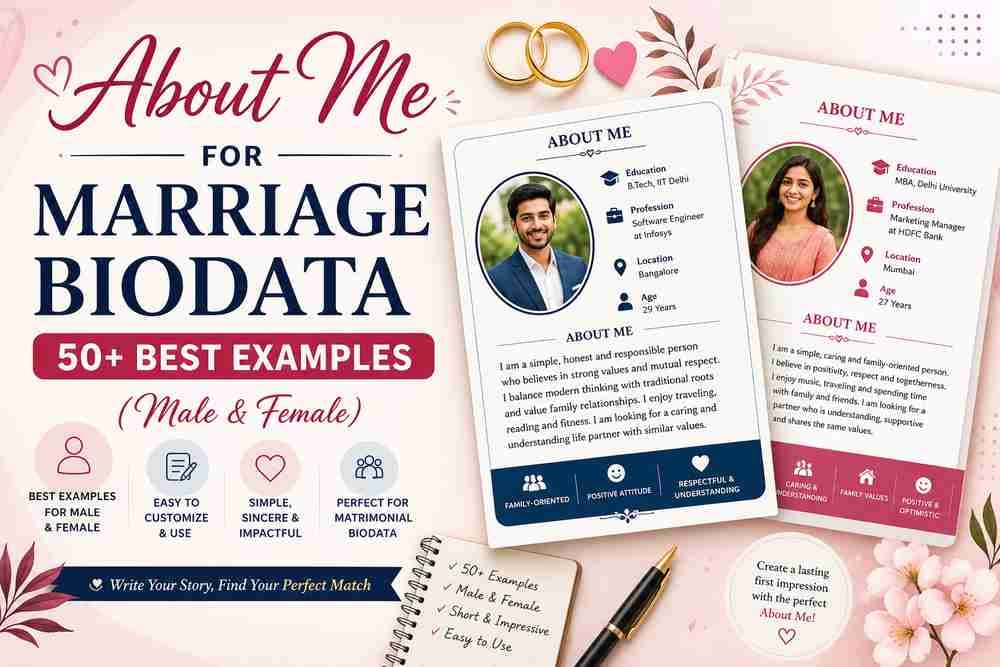
A short self-introduction describing personality and goals.
Partner Preferences
Modern biodata often includes expectations from a life partner.
Advantages of Modern Biodata Formats
Attractive Presentation
Modern designs grab attention instantly.
Better Personal Branding
It helps showcase personality beyond basic details.
Mobile-Friendly
Perfect for digital sharing and online matchmaking.
Professional and Elegant
Modern templates often look polished and premium.
Limitations of Modern Biodata Formats
Despite their popularity, modern biodata formats also have some drawbacks.
Too Much Design
Overly decorative layouts may distract from important information.
Not Preferred by Some Families
Traditional families may prefer simpler formats.
Can Feel Informal
Some modern templates appear more like resumes or social profiles.
Traditional vs Modern Shadi Biodata Format
Feature | Traditional Format | Modern Format |
|---|---|---|
Design | Simple and formal | Stylish and creative |
Focus | Family and culture | Personality and lifestyle |
Preferred By | Elders and traditional families | Younger generation |
Visual Appeal | Minimal | High |
Digital Sharing | Limited | Excellent |
Personalization | Low | High |
Suitable For | Arranged marriages | Matrimonial apps and modern matchmaking |
Which Shadi Biodata Format is Better?
There is no single “best” format. The ideal choice depends on your family preferences, cultural background, and target audience.
Choose Traditional Format If:
- Your family prefers arranged marriage traditions
- Religious compatibility is important
- Elders will review the biodata first
- You want a formal and simple profile
Choose Modern Format If:
- You are sharing biodata digitally
- You want stylish presentation
- You prefer personalized profiles
- You are using matrimonial websites
Hybrid Biodata Format: The Best of Both Worlds
Nowadays, many people prefer a hybrid marriage biodata format that combines traditional values with modern design.
A hybrid biodata includes:
- Clean professional layout
- Family details
- Attractive design
- Personal introduction
- Modern typography
This approach satisfies both younger individuals and traditional families.
Essential Tips for Creating an Effective Shadi Biodata
Use High-Quality Photos
Choose clear and professional pictures.
Keep Information Accurate
Avoid exaggerating details.
Maintain Clean Formatting
A clutter-free design improves readability.
Write a Good About Me Section
Keep it genuine and concise.
Avoid Spelling Mistakes
Proofread carefully before sharing.
Mistakes to Avoid in Marriage Biodata
Adding Too Much Information
Keep the biodata concise and relevant.
Using Poor Quality Photos
Blurry images create a negative impression.
Overdesigning the Biodata
Too many colors or graphics can look unprofessional.
Hiding Important Details
Transparency builds trust.
Copying Generic Templates
Try to personalize your profile.
Best Format for WhatsApp Sharing
If you plan to share your biodata on WhatsApp or email:
- Use PDF format
- Keep file size optimized
- Use readable fonts
- Ensure mobile-friendly design
Modern or hybrid formats work best for digital sharing.
How to Create a Shadi Biodata Online
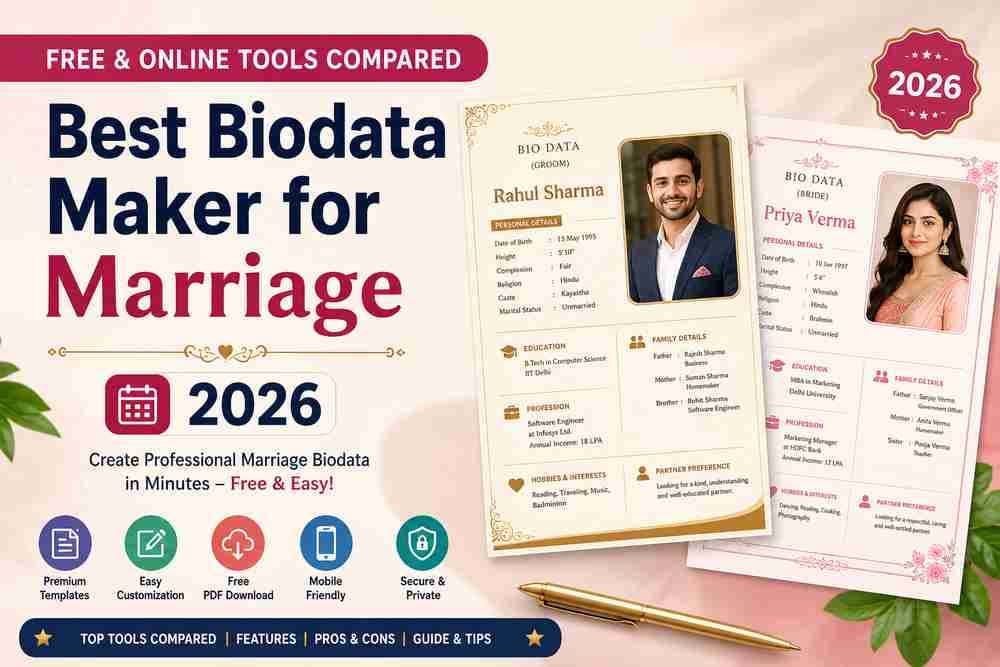
Today, many online tools help users create professional marriage biodata within minutes.
You can easily:
- Select templates
- Add photos
- Customize sections
- Download PDF biodata
One popular platform for creating professional marriage biodata is Marriage Biodata Creator, where users can create elegant and customizable biodata formats online.
Why Biodata Design Matters in Matrimony
A well-designed biodata:
- Creates a strong first impression
- Improves readability
- Reflects personality
- Increases chances of response
- Makes your profile memorable
In modern matchmaking, presentation plays a significant role alongside personal details.
Future Trends in Shadi Biodata Formats
Marriage biodata formats are becoming increasingly digital and personalized.
Upcoming trends include:
- AI-generated biodata
- Interactive digital profiles
- QR code-enabled biodata
- Video introductions
- Mobile-first templates
Modern matrimonial platforms are transforming how people present themselves for marriage.
Conclusion on Shadi Biodata Format
Both traditional and modern shadi biodata formats have their own strengths. Traditional formats emphasize family values, religion, and simplicity, while modern formats focus on presentation, personality, and digital convenience.
The best approach is to choose a format that aligns with your family expectations and personal style. In many cases, a hybrid biodata format works perfectly by combining traditional details with modern aesthetics.
A well-crafted marriage biodata can significantly improve your matrimonial journey and help create meaningful first impressions.
FAQs on Shadi Biodata Format
What is the best shadi biodata format?
The best format depends on your preferences. Traditional formats suit arranged marriages, while modern formats are ideal for digital sharing and younger audiences.
Is modern biodata better than traditional biodata?
Not necessarily. Both formats serve different purposes and audiences.
What should be included in a marriage biodata?
A marriage biodata should include personal details, education, profession, family background, hobbies, and partner preferences.
Which format is best for WhatsApp sharing?
Modern or hybrid PDF formats are best for WhatsApp sharing because they are visually appealing and mobile-friendly.
Can I create a marriage biodata online?
Yes, several online platforms allow users to create customizable marriage biodata easily.
Should I include hobbies in marriage biodata?
Yes, hobbies and interests help showcase personality and compatibility.
What photo should I use in my biodata?
Use a clear, recent, and professional-looking photograph.
How long should a shadi biodata be?
Ideally, 1–2 pages are sufficient for a clean and professional biodata.